The unknown can feel less daunting when a child has been there before, even in a story. Here’s how to make a book that prepares them for something new, with your child overcoming the challenge by the final page.
Why a story helps
Children think in stories. When something new is coming, they try to imagine what it will be like, and worry can fill in the gaps. A story gives them something to hold on to: this is what it looks like, this is what happens, and this is how it feels afterwards.
A conversation at the dinner table can be over in a minute. A book can be read again whenever your child wants, and they can stop at a page to ask questions. The pictures help too: a hallway with little coat hooks feels less unfamiliar when your child has already seen it in a book.
When your child is the main character, it becomes even more real. It isn’t a bear cub starting preschool, but your child, with their own face and dinosaur backpack. Seeing themselves manage it is a kind of practice run, and one they can repeat every evening.
Starting preschool or school
Starting preschool is a big change for many children. Every preschool has its own way of helping children settle in: some invite parents to stay at first, while others arrange shorter visits before a full day. Ask your preschool how they do it and let the book follow the same steps.
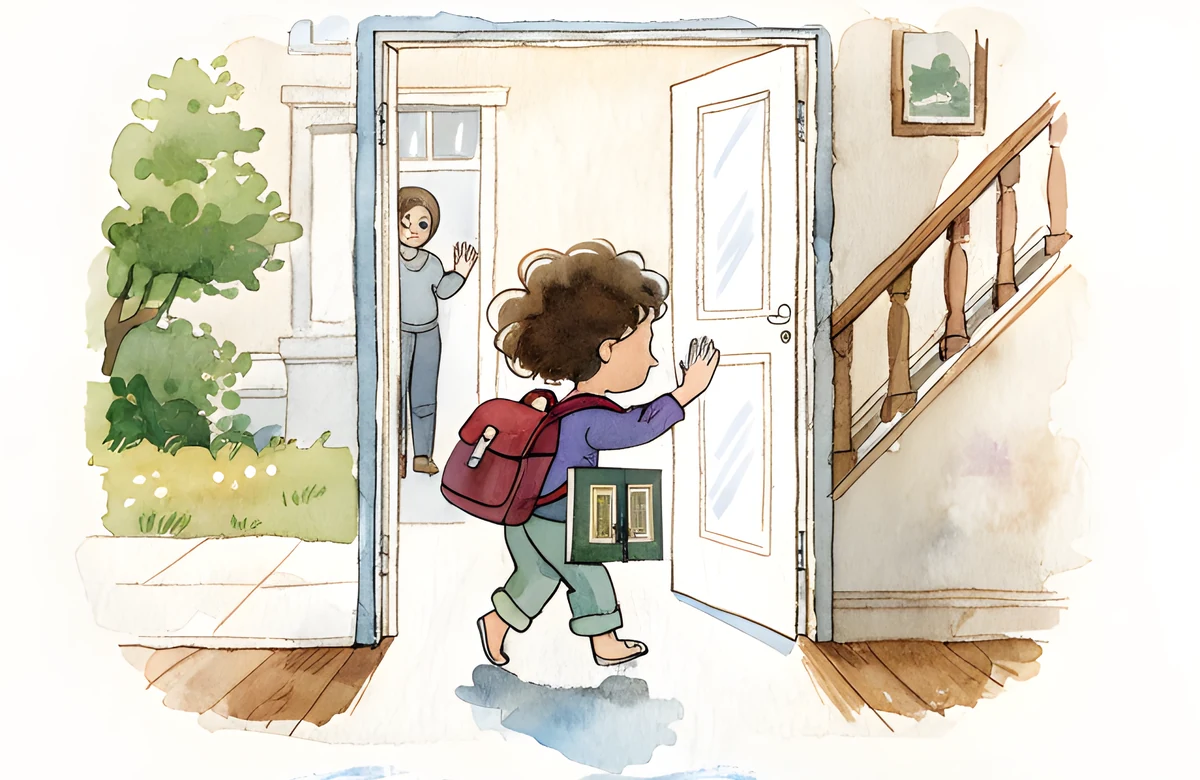
Include what will actually happen: the preschool’s name, the sandbox and red tricycle, and who will pick your child up after snack time. The more the story resembles the real day, the more familiar it will feel. Include the difficult parts too. Saying goodbye can be the moment children worry about most, so give it a page of its own, ending with your child waving through the window and then joining the others at play.
For a child starting school, the book might explore finding the right classroom, not knowing anyone or putting their hand up for the first time. If a friend is starting in the same class, they could appear in the story too, as long as their parents are happy with that.
Moving house
A move changes so much at once: a child’s room, the garden, the neighbors and the journey to preschool. Adults see the new house. Children may see mostly what they’re leaving behind. A story can make room for both, letting your child say goodbye to the old place before discovering the new one.
Include details from the new home so they feel familiar when you arrive: an apple tree in the garden, a window overlooking the water or a playground with a tall climbing net. Let your child bring something from the old home in the story, such as a favorite stuffed animal, a stone from the garden or their own night light. They can pack their own moving box, which could become a treasure chest that travels with them all the way.
If you’re moving to another country, the book can show that friends and grandparents are still there, even if they’re farther away. It can also be translated into the language of your new home, at no extra cost and with the same pictures.
A new sibling
Becoming a big sister or brother is exciting, but it can be hard too. Your child has to share attention with someone who can’t play yet, cries at night and attracts everyone’s interest.
Make the story about the older sibling. The baby can be there, but the hero is the child who’s already part of the family: the one who shows the baby the world, comforts them when they cry or teaches them to wave. You could also show what the older child can do that the baby can’t: ride a bike, eat ice cream or stay up a little later.
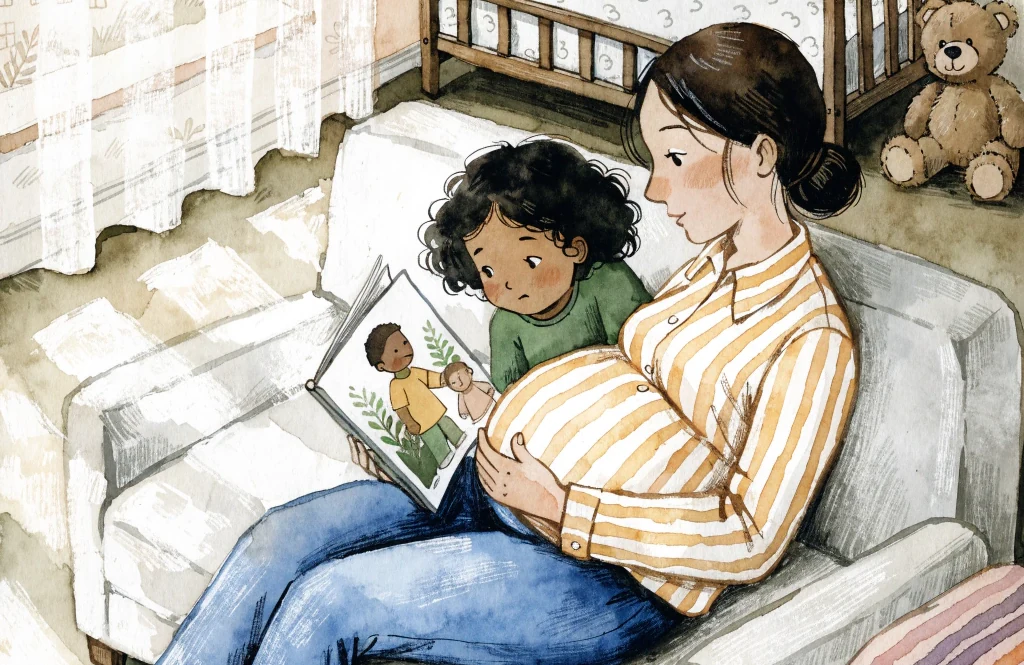
You can make the book before the baby is born; simply describe them in words rather than using a photo. Once the baby arrives, you can make a sequel with the same family, this time with the baby’s real face.
Keep reading the book after the baby arrives, especially when things feel difficult. A cuddle with your older child and a book in which they are the hero can say something that’s hard to put into words: you’re just as important as ever.
Hospital and dentist visits
A medical appointment can be frightening precisely because your child doesn’t know what to expect: the sounds, the smell of hand sanitiser, the big chair and an adult wearing a mask. A story can introduce it all beforehand, calmly and without surprises.
Be honest. The Swedish health service 1177 advises parents not to promise that something won’t hurt, but to explain that there are ways to make it hurt less. Your book can do the same. Describe the chair moving up and down, the dentist counting teeth with a little mirror, and how something might sting a little. You could add a sticker afterwards, if one will be available.
Timing matters. For children aged three to six, reading the book the day before may be enough, as a long wait can give worries time to grow. A school-age child may need a few days. A stuffed animal can be a good companion: let teddy be examined first, so your child can see what happens before it’s their turn.
Before an operation or a longer hospital stay, talk to the care team about what your child needs to know and let the book follow their guidance. End with something to look forward to afterwards, such as coming home, eating ice cream on the sofa or telling friends about it.
An ending to hold on to
A story that prepares a child should acknowledge the hard part, but not stop there. It’s fine for your child to feel nervous at the beginning; that feeling deserves a place in the story. By the final pages, they’ve made it through and feel proud. That’s the picture they can carry with them when the real moment comes.
In the box asking what should be included in the story, describe how you’d like it to end: perhaps your child waves to Dad through the window and then runs over to the sandbox, or sleeps soundly on the first night in their new room.
Choose the age group carefully. For a two-year-old, short pages about being dropped off and picked up may be enough. An eight-year-old changing schools can enjoy a longer story with a wider range of feelings. You can find more guidance on what suits different stages under ages.
Read it beforehand and afterwards
For big changes such as starting preschool, moving or welcoming a new sibling, start reading a week or so beforehand, giving your child time to ask questions. Your personalized children’s book is ready as an eBook within minutes of payment, so you can make it as soon as you know what’s coming.
Listen to what your child says as you read. Questions such as ‘Can I cry at preschool?’ or ‘What if I can’t find the toilet?’ show you what’s really on their mind. You can answer there and then, or change the text on a page so the answer is there next time you read together.
Read it again afterwards. The book becomes a reminder of something your child managed, ready to bring out the next time something new is on the horizon. You’ll find more inspiration among our book ideas.
Would you like to see a finished book before you decide? Browse our example books.
The next story could be about your child
Upload a photo or a drawing your child has made, and we’ll create an illustrated story with them as the hero.
- 1
A photo or a drawing
Your child becomes the hero, or the character they’ve drawn does. Brothers, sisters, Grandma and the cat can join in too.
- 2
Choose what the story is about
Pick a theme, a message and things your child loves. You can add details you’ve made up together too.
- 3
Read it tonight
The eBook is ready in minutes and costs $7.99. You can add a hardcover for $44.99 more.