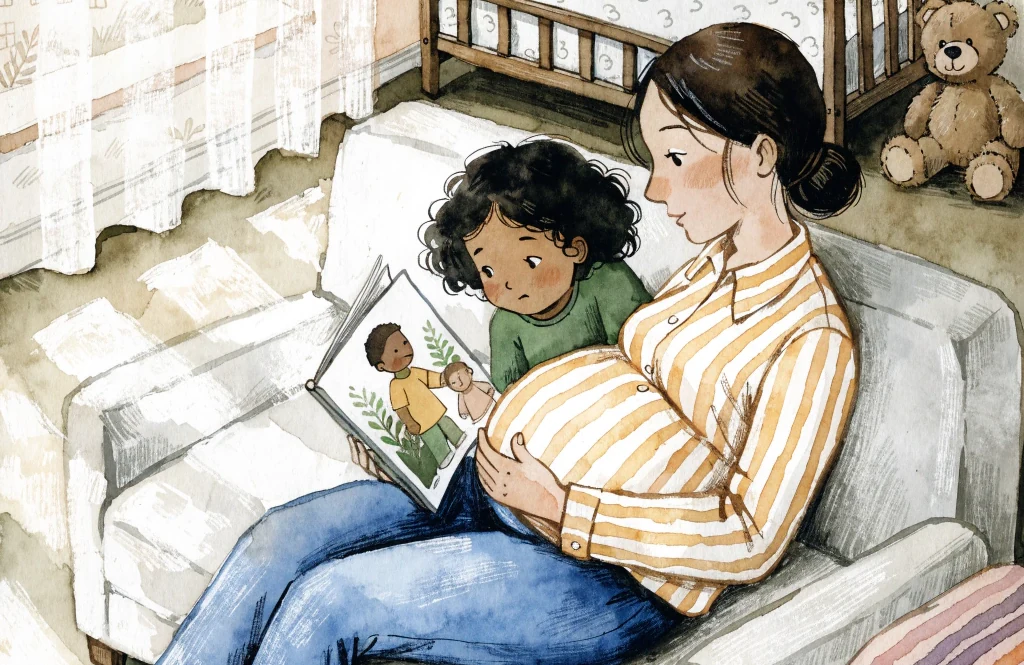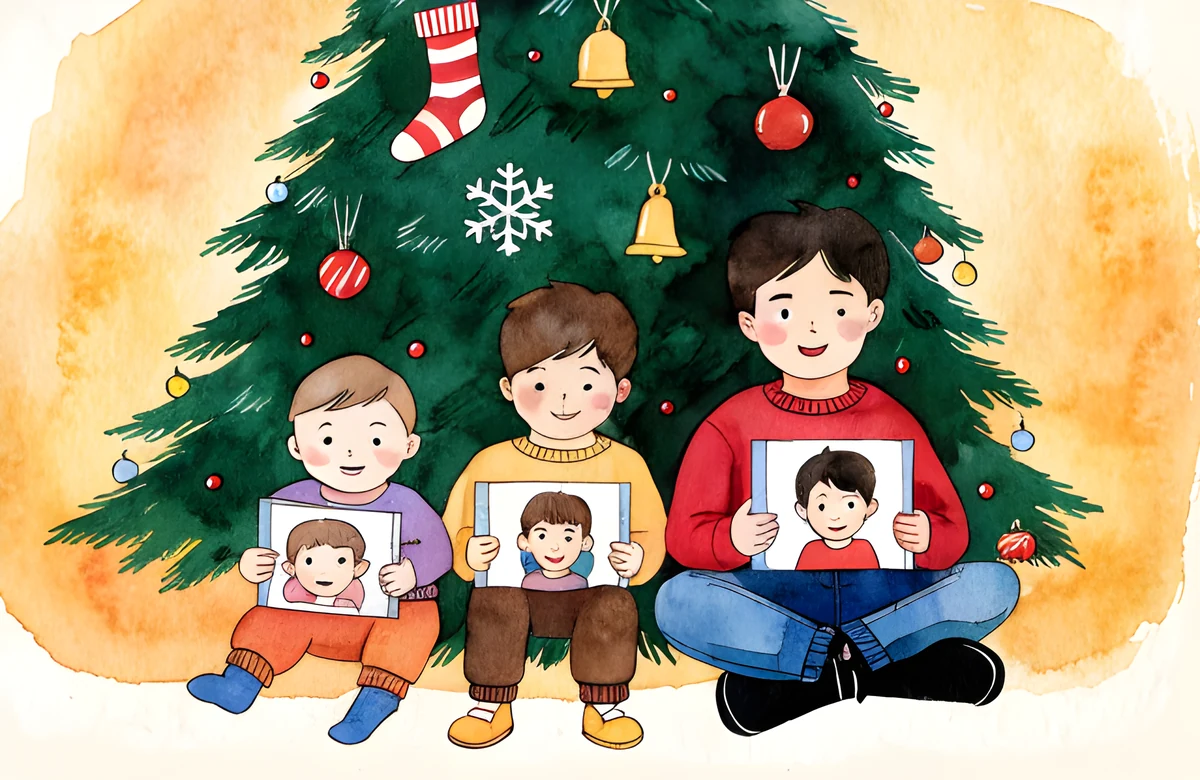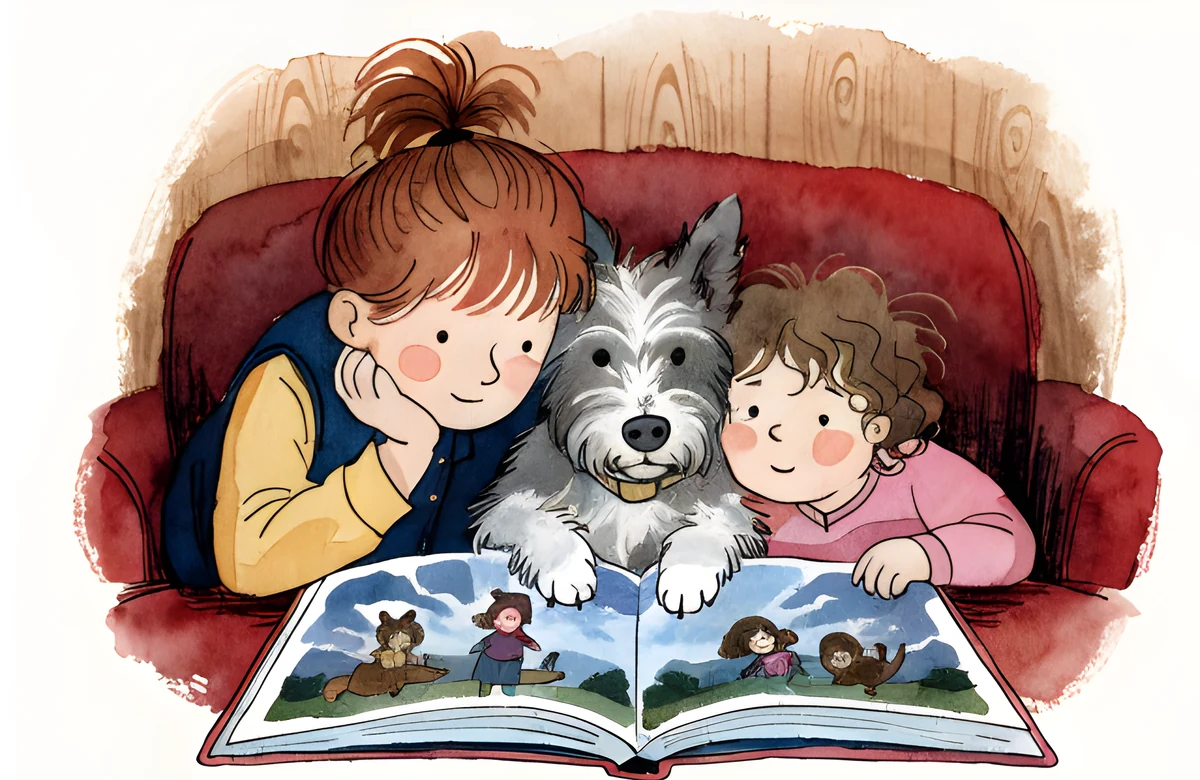
There’s room for five characters in a book. Here’s how to bring siblings, cousins, grandparents and pets into the same story, and make sure no one is left standing in the background. Children notice. Every time.
Five places to fill
When you make the book, you add the characters one at a time: people, animals or a cuddly toy, up to five in all. The first is the main character, and you can add a photo or describe them in words. For the others, you add a role and a relationship, such as little sister, cousin, grandad or best friend, so the story knows who they are to one another.
The other characters can have photos too, so they look like themselves on every spread. Without a photo, you describe them in words. That works well for a make-believe dragon or a fairy, but for real family faces, it’s hard to beat a photo. Remember that a cuddly toy counts as one of the five.
Five might not sound like many. But the book has thirteen spreads, and with more characters the pictures become crowded and the story loses focus. Think about who really belongs in this particular adventure, and save the rest for another book.
Who comes first?
The main character is the person the story follows from the first spread to the last. If you’re giving the book to a child, it’s natural to put them first. If it’s a present for Grandad, he could be the main character instead, with his grandchildren alongside him.
With siblings, it can be more sensitive. If the book is for both of them, make them a team: a big sister and little brother looking together for the key to the garden shed. Say so in the box asking what you’d like to include in the story. For example, ask for them to solve the puzzle together, so both have a meaningful part even if one is listed first.
Or make a book for each child. Once the first book is ready, you can make another with one click, with little sister as the hero, the same characters, photos and illustration style, and big brother in a supporting role. Exact fairness, perhaps, but the kind siblings really do care about.
Give everyone something to do
The child who remembers a book with a little hurt is rarely the main character. It’s the sibling who was only ever in the background. Think about what each person gets to do. A character who simply tags along is an extra. A character with a task of their own is part of the adventure.
Share what makes each person special. Perhaps cousin Emily can whistle with two fingers, little brother always finds things that have been lost, or Grandad knows the name of every bird. A couple of details per person is enough. They’re what the children will look for as they turn the pages.
Be careful with roles that box children in. If big brother is always the brave one and little sister is always afraid, both will remember it. Let the roles change: one dares to climb the tree, while the other works out how to get down. A shared goal, such as rescuing a stranded whale or building a raft, helps bring them together.
Grandparents, cousins and friends
A book featuring Grandma or Grandad often becomes the one children ask to read most when they visit. It could be about something you usually do together, like a walk in the woods or baking biscuits, or something you’ve never done, like a trip to the moon in Grandad’s old car. The children get to see Grandma running and climbing in ways they may never have seen in real life.
Cousins who only see each other in the summer holidays and at Christmas can have a book together, and each family can order their own printed copy. If any of them live abroad, the book can be translated into their language at no extra cost, with the same pictures.
When children are different ages, the book is written for one age group. Choose the youngest child’s age and the text will be short enough for the oldest to read aloud to the others. Choose the oldest child’s age and the little ones can listen to a longer story, which often works well snuggled on someone’s lap.
A best friend can join in too, but ask their parents first. You need to be the parent or guardian of anyone shown in a photo, or have their parent or guardian’s permission. If they say no, there’s an easy alternative: describe the friend in words instead.
Animals bring the story to life
The family pet is often the character children laugh at most. The dog who runs ahead, the cat who refuses to come along and then appears just when needed, or the rabbit who eats the treasure map. Include the animal’s little quirks: perhaps the dog is afraid of the vacuum cleaner, or the cat only drinks from the tap.
For a young child, a teddy isn’t just a toy but a friend, and seeing it come to life could be the best part of the whole book. Give it a name and say what it likes to do.
A family pet who has died can be included too. A book in which the cat who died in the spring joins the family on one last adventure can offer a gentle way into a conversation about missing them.
If someone still gets left out
Read the eBook yourself first. If you notice that a sibling has been pushed into the background, you can change the text and ask for new pictures. It’s easier to put things right before the book is printed than to explain afterwards.
Sometimes it’s the pictures that don’t feel quite right: little brother looks older than he is, or a cousin’s curls have become straight. Ask for a change and describe in a few words what should be different, and the page will be redrawn. For tips on taking photos that give the best likeness, see our post on choosing a photo. You’ll find more answers about characters on the help page.
Would you like to see a finished book before you decide? Browse our example books.
The next story could be about your child
Upload a photo or a drawing your child has made, and we’ll create an illustrated story with them as the hero.
- 1
A photo or a drawing
Your child becomes the hero, or the character they’ve drawn does. Brothers, sisters, Grandma and the cat can join in too.
- 2
Choose what the story is about
Pick a theme, a message and things your child loves. You can add details you’ve made up together too.
- 3
Read it tonight
The eBook is ready in minutes and costs £6.99. You can add a hardback for £26.99 more.