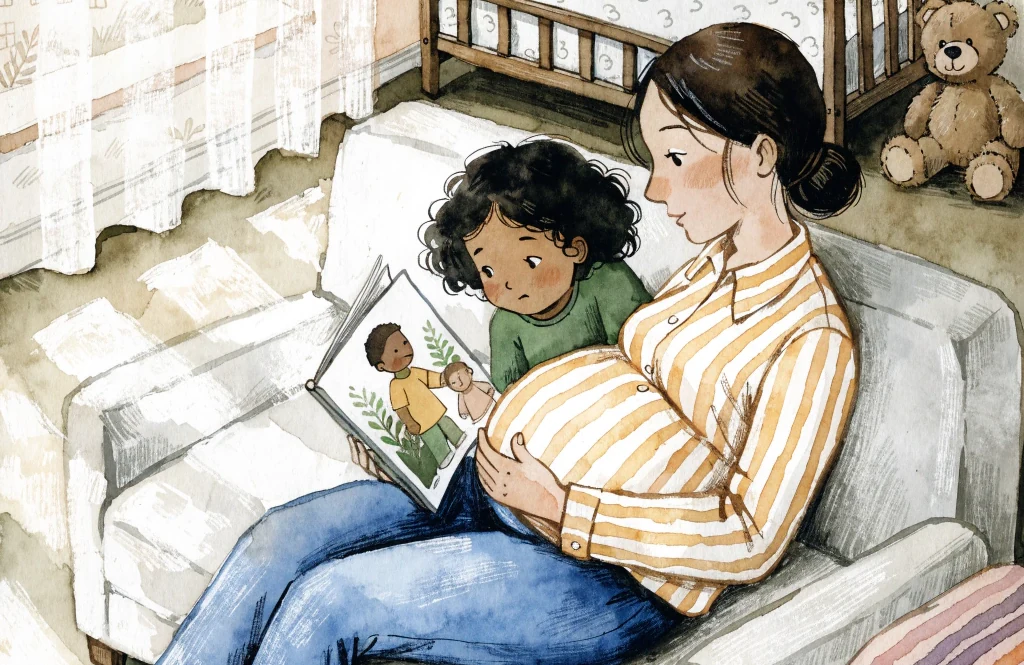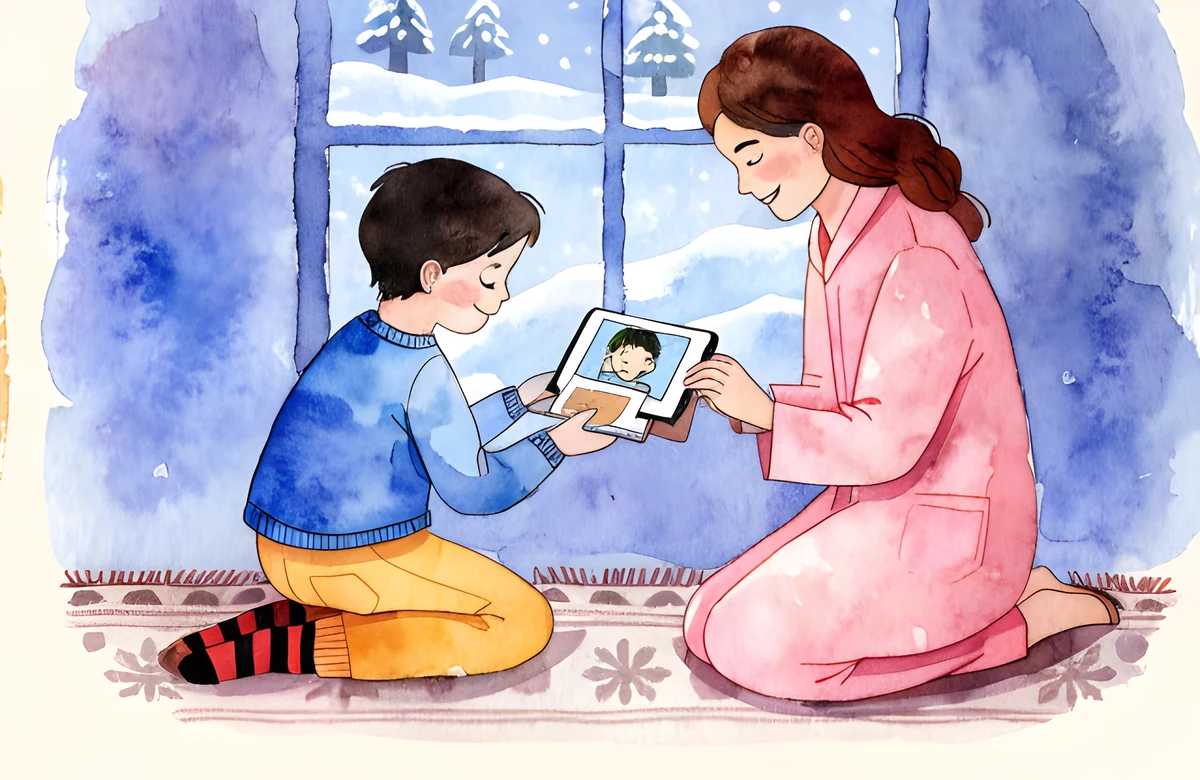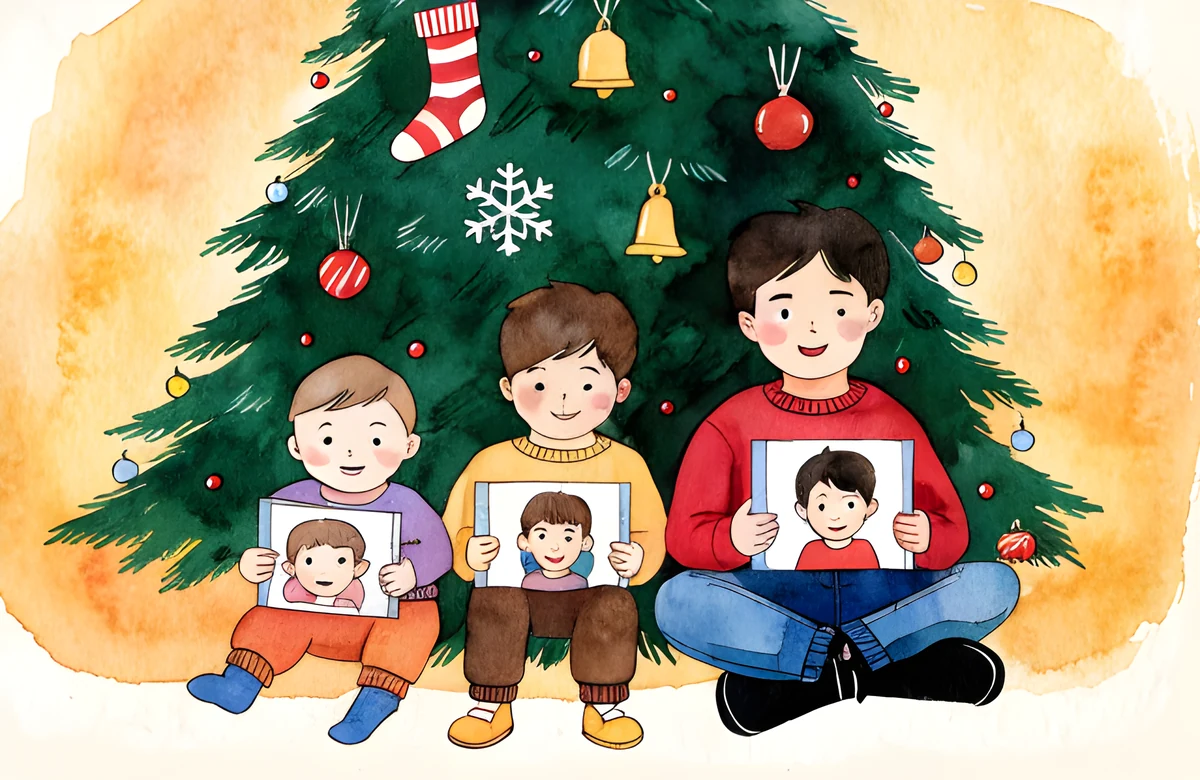
A one-year-old wants to point at Grandma. A four-year-old wants to save a dragon. A ten-year-old definitely doesn't want anything that seems babyish. A book with the child as the hero can suit all three, but the stories need to be written very differently. Here's how it works, and how to get your book in time for Christmas.
Four age groups, not twelve
When you make the book, you choose one of four age groups: 0–2, 3–5, 6–9 or 10 and up. The group determines how much text appears on each page, how challenging the words are and how much is at stake in the story. The book has thirteen spreads, with text on one side and a full-page picture on the other.
If your child is on the boundary, perhaps a newly turned six-year-old who isn't reading yet, choose based on how you read together now rather than their birthday. A book that feels a little easy will get read. One that feels too difficult may be left on the shelf.
Ages 0–2: faces, rhymes and a twinkling tree
There are about forty words per page, in short sentences with rhythm and repetition. Something happens, then it happens again, almost the same way. Young children love knowing what's coming next, and being right.
For the youngest children, familiar faces can matter more than the plot. A one-year-old may point at Grandma in the book long before they can say her name. Include family members, and the cat if you have one. A bedtime story or Christmas theme works well.
Two things to know: the book has paper pages and won't stand up to chewing like a board book, so it's best read on a grown-up's lap. And your child may not read the dedication themselves for years, so write it with that future reader in mind. Find more ideas for babies, one-year-olds and two-year-olds.
Ages 3–5: big imaginations, gentle thrills
There are around eighty words per page, with short sentences and a plot that's easy to follow. The child finds something, helps someone, or makes a mess and puts it right. There can be excitement, but the ending feels safe.
This is the age when a child can be a knight before lunch and a vet after their afternoon snack. Choose what they're talking about now, not what they loved last summer: dinosaurs can make way for fire engines in a week. A three-year-old who is beginning to understand Christmas might enjoy helping Santa with the presents. A five-year-old might prefer to rescue him.
Many five-year-olds recognise their own name in writing. Seeing it in big letters on a cover is something special. Read more about books for three-year-olds, four-year-olds and five-year-olds.
Ages 6–9: dialogue and a real problem to solve
There are around a hundred words per page, with characters talking to one another and a problem the child solves themselves. No grown-up swooping in on the last page to fix everything.
A child who has just learned to read often reads slowly and may find the books they can manage alone a little silly. Being the main character can give a seven-year-old a reason to tackle one more page. Include things that are actually part of their life: football practice, their trading cards or the den behind the garage.
An eight-year-old might read the book aloud to Grandma on Christmas Day, and that's a moment worth seeing. Find more ideas for six-year-olds, seven-year-olds, eight-year-olds and nine-year-olds.
Ages 10 and up: nothing babyish, please
There are around 150 words per page in two or three paragraphs, with richer language, more dialogue and genuine suspense. That matters: a ten-year-old may be reading chapter books and can tell from the first page when something is written for younger children.
Humour is a safe bet. A book in which the child saves the whole family and Dad is a hopelessly clumsy pirate may go down better than a gentle tale about friendship. Haunted houses, Vikings and time travel work well too.
For a twelve-year-old, the book can become a snapshot of who they were at that age, even if nobody admits it until much later. Read more about books for ten-year-olds, eleven-year-olds and twelve-year-olds.
Two children of different ages
You can make a book for each child, or one shared story in which siblings help each other. A shared book is written for one age group: choose the younger child's group if you're reading aloud to both, and the older child's if they will be reading it themselves. For ideas on giving everyone a part to play, see our post about siblings and cousins.
Will it arrive in time for Christmas?
The eBook is ready a few minutes after you pay. Once you've read it and are happy with it, you can order the hardback, and what you've already paid will be deducted from the price. Printing takes 3–10 working days, and delivery to your door takes a further one to two weeks. Allowing for the longest printing and delivery times, order the hardback by 2 December for it to arrive before Christmas Eve.
If you're running late, you can give the eBook at Christmas and let the printed book follow. For ideas on wrapping a PDF, see our last-minute Christmas gifts post. You'll find all the costs on our pricing page and more themes among our book ideas.
Would you like to see a finished book before you decide? Browse our example books.
The next story could be about your child
Upload a photo or a drawing your child has made, and we’ll create an illustrated story with them as the hero.
- 1
A photo or a drawing
Your child becomes the hero, or the character they’ve drawn does. Brothers, sisters, Grandma and the cat can join in too.
- 2
Choose what the story is about
Pick a theme, a message and things your child loves. You can add details you’ve made up together too.
- 3
Read it tonight
The eBook is ready in minutes and costs €6.99. You can add a hardback for €36.99 more.