It’s easy to think of a new baby as a gift for your older child. To them, it can feel more like someone moving into their room without asking, and never moving out. Here’s how to help, whether you have a two-year-old who doesn’t understand, a three-year-old who wants a bottle again or a school-age child who says nothing at all.
First, it’s OK to feel a little sad too
Many parents feel a pang of sadness alongside the excitement. The time when it was just you and your first child is coming to an end. And once the baby arrives, something strange can happen. The child who was your baby yesterday suddenly seems enormous, with big feet, a loud voice and elbows everywhere. You might even find yourself irritated by how much space they take up. Then they fall asleep, and you see how little they still are.
That doesn’t mean you’re doing anything wrong. It means you understand how big this change is for your child, and that’s a good place to start. You can’t protect them from every difficult feeling, and you don’t need to. What matters is that they can have those feelings with you close by.
During the wait: tell them yourself, and tell the truth
Tell your child yourself, before they hear the news from someone else. When to tell them depends on their age. ‘In five months’ means very little to a two-year-old, so you might wait until your bump is showing and things are starting to change at home. A five-year-old can hear the news earlier and have time to wonder and ask questions. Give them a marker they understand: after their birthday, or around the time a familiar family event usually happens.
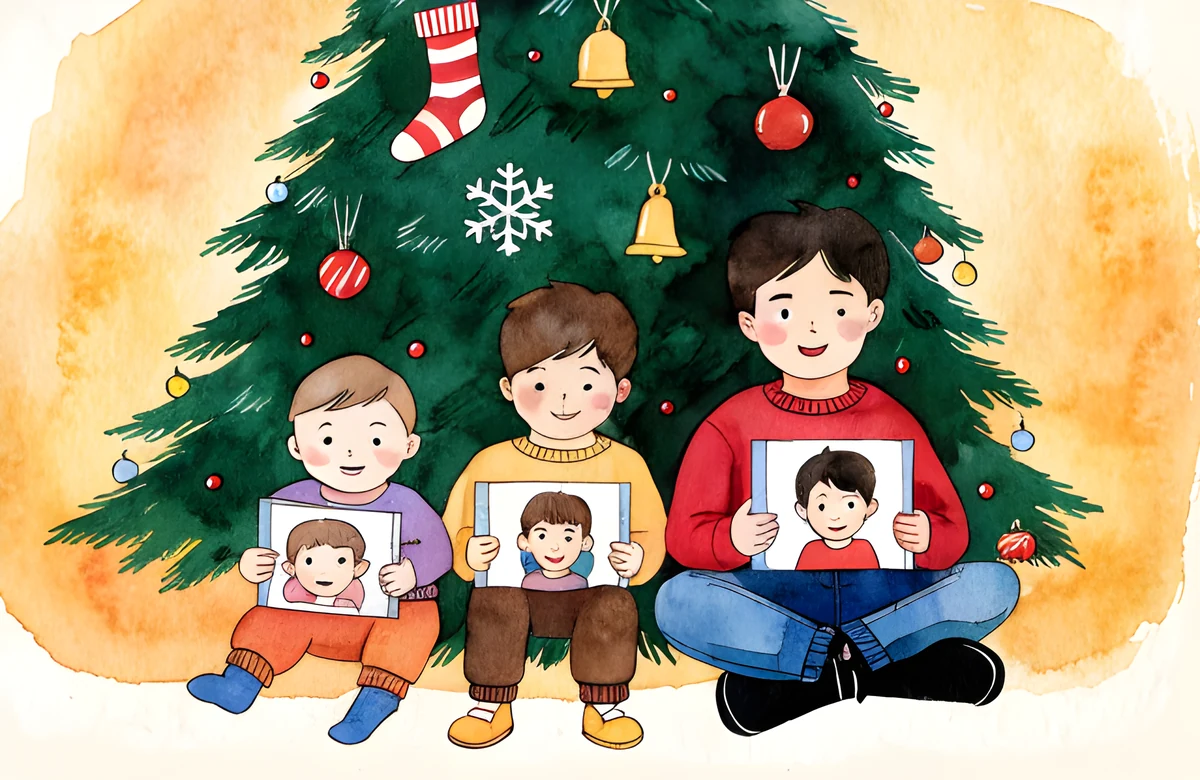
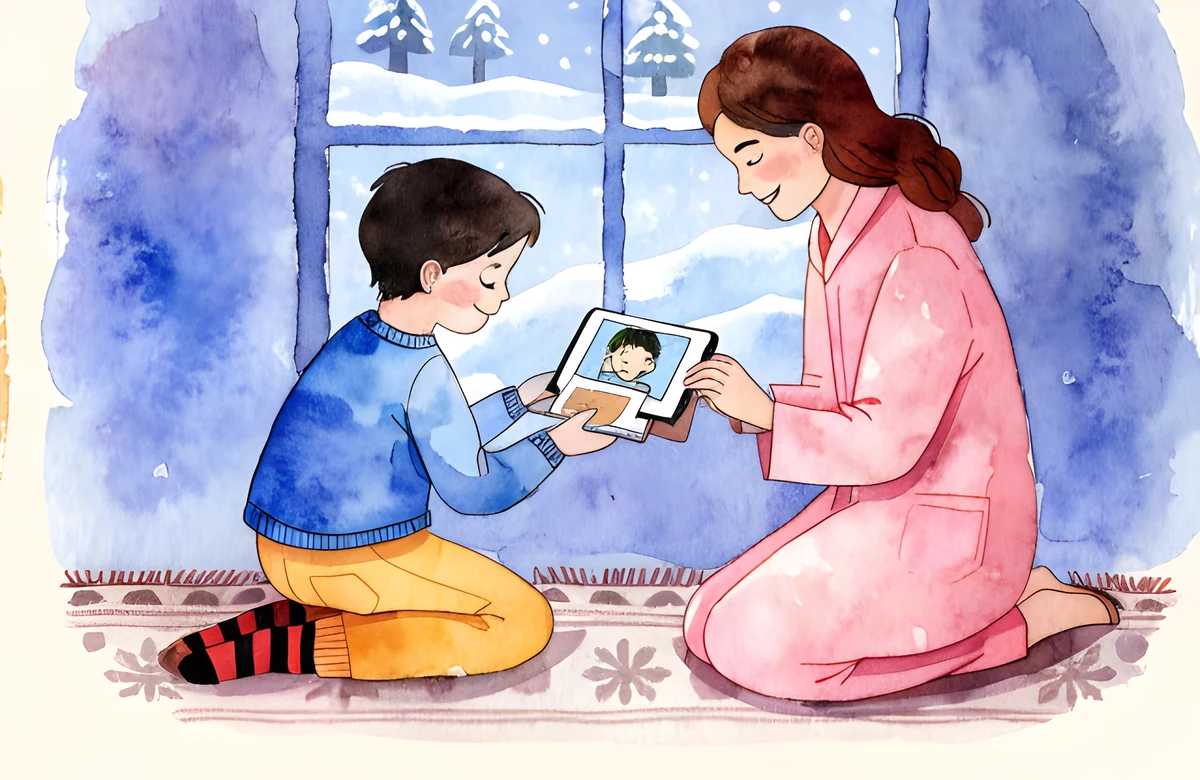
Be honest about what babies are like. A child expecting an instant playmate is likely to be disappointed. You could say, ‘Babies are a bit boring at first. They can’t build Lego; they mostly eat, sleep and cry. But when the baby is asleep, you and I can build the tallest tower.’ Or look at your child’s baby photos together: ‘You were this little once. You cried when you were hungry, and I came to you.’
Moving from a cot to a bigger bed, or into a different bedroom? Try to do it several months before the baby arrives, so it doesn’t feel as though the baby has taken their place. Leave changes that can wait, such as giving up a dummy or nappies, until everyone has had time to settle.
Even a one-year-old who doesn’t understand the word ‘baby’ will notice that things are changing: there’s less room on your lap as your bump grows, you’re more tired, or there’s a new cot in the corner. You may not be able to explain it all, but you can offer reassurance through the same bedtime routine, the same story and a little extra time on your lap.
The first meeting: try to have your arms free
If you take one suggestion from this article, let it be this one. If you can, avoid holding the baby when your older child comes to meet them at hospital or when you walk through the door at home. Put the baby down safely or ask someone else to hold them, so you can greet your older child with your arms free and give them the first hug. If it doesn’t happen that way, don’t worry. It’s the thousands of little moments that matter, not just one.
Let your child approach the baby at their own pace. Some want to hold them straight away. Others take a quick look and then ask if there’s any ice cream. Both are perfectly normal ways to respond to something that’s a lot to take in.
Some families give the older child a present ‘from the baby’. It doesn’t have to be expensive. It can simply be a small way to make them feel thought of.
The weeks afterwards: when it starts to feel real
The hardest moment often isn’t the first day. It might be a Tuesday three weeks later, when the visitors have stopped coming and your child realises the baby is staying. And somehow, just as you sit down to breastfeed or give a bottle, your three-year-old needs milk right now or starts climbing the bookcase. Have something ready for those moments: an audiobook, a box of stickers that comes out only at feeding time, or a book you can read together on the sofa while the baby feeds.
Many children want to be little again. Children as old as five or six may ask for a bottle, want to be carried or start using a baby voice, and it can take months for these changes to appear (Swedish health service 1177, in Swedish). Let your child be little for a while. They may not need to for long. Try saying ‘you’re so big now’ a little less often. Big children need to feel small sometimes too.
And at some point you may hear it: ‘Take the baby back.’ Don’t be alarmed or ashamed. Put your child’s feelings into words, rather than telling them how you wish they felt: ‘You liked it better before. I understand. Sometimes I miss it being just us too.’ For a three-year-old, keep it simpler: ‘You’re angry with the baby. It’s OK to be angry. But we don’t hit.’
A school-age child has more words, but not necessarily smaller feelings. Older children may hold it together for a long time, then become argumentative, upset or unusually eager to please. That last one is worth noticing. A child who suddenly seems to need nothing may need you more than ever.
One-to-one time, and who gets the first hello
Give your older child a little time each day that’s just for them, including with the parent who is busiest with the baby. It doesn’t have to be long, but let it be something the baby can’t join in with: a trip to the playground, a puzzle or a story on your older child’s bed with the door closed.
Catch visitors at the door and ask them to say hello to your older child first, before they lean over the baby. If someone brings a present for the baby, they might bring a little something for the older child too. These are the things children can remember long after the baby clothes have been outgrown.
A book where your older child is the hero
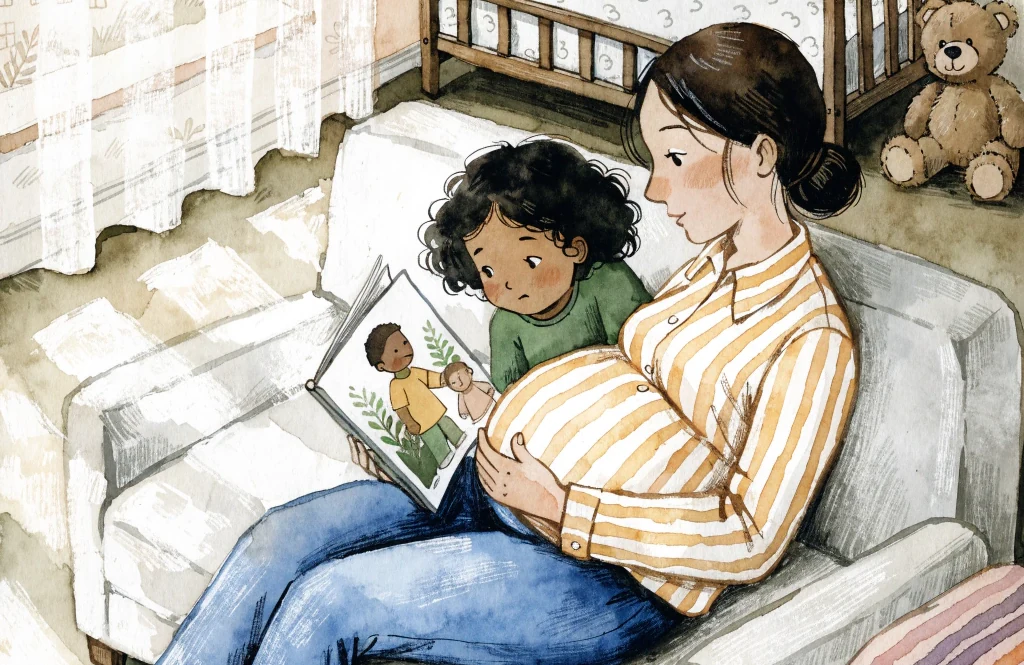
When everyone’s attention is on the baby, your older child needs a chance to be the hero too. A book of their own can give them that: a big brother or sister with their own face, their own teddy and a mission only a big sibling can take on. Read it together on the sofa while the baby sleeps, for fifteen minutes when it’s all about your older child again. It can also make a lovely present from the baby at their first meeting. See our gifts for soon-to-be big siblings or the Big Brother or Sister theme.
And in a few years, when their younger sibling wants a book that’s just for them, they can appear in each other’s stories too. Find out how to make room for both children in our post about siblings in the same book.
If it all feels too much
Most siblings find their way to each other in their own time, often in moments nobody could have planned: the first time the baby laughs at their big sibling, and only at their big sibling. But if you’re worried, or finding it hard to bond with the baby or be there for your older child, talk to someone early.
Your GP, health visitor or another child and family health professional can help you find support. For a school-age child, you can also talk to their teacher or the school’s wellbeing team. The Swedish health service 1177 has an overview of becoming a sibling in Swedish, which also covers adoption and families coming together.
Would you like to see a finished book before you decide? Browse our example books.
The next story could be about your child
Upload a photo or a drawing your child has made, and we’ll create an illustrated story with them as the hero.
- 1
A photo or a drawing
Your child becomes the hero, or the character they’ve drawn does. Brothers, sisters, Grandma and the cat can join in too.
- 2
Choose what the story is about
Pick a theme, a message and things your child loves. You can add details you’ve made up together too.
- 3
Read it tonight
The eBook is ready in minutes and costs $9.99. You can add a hardback for $54.99 more.