From the garden to the dust of the moon
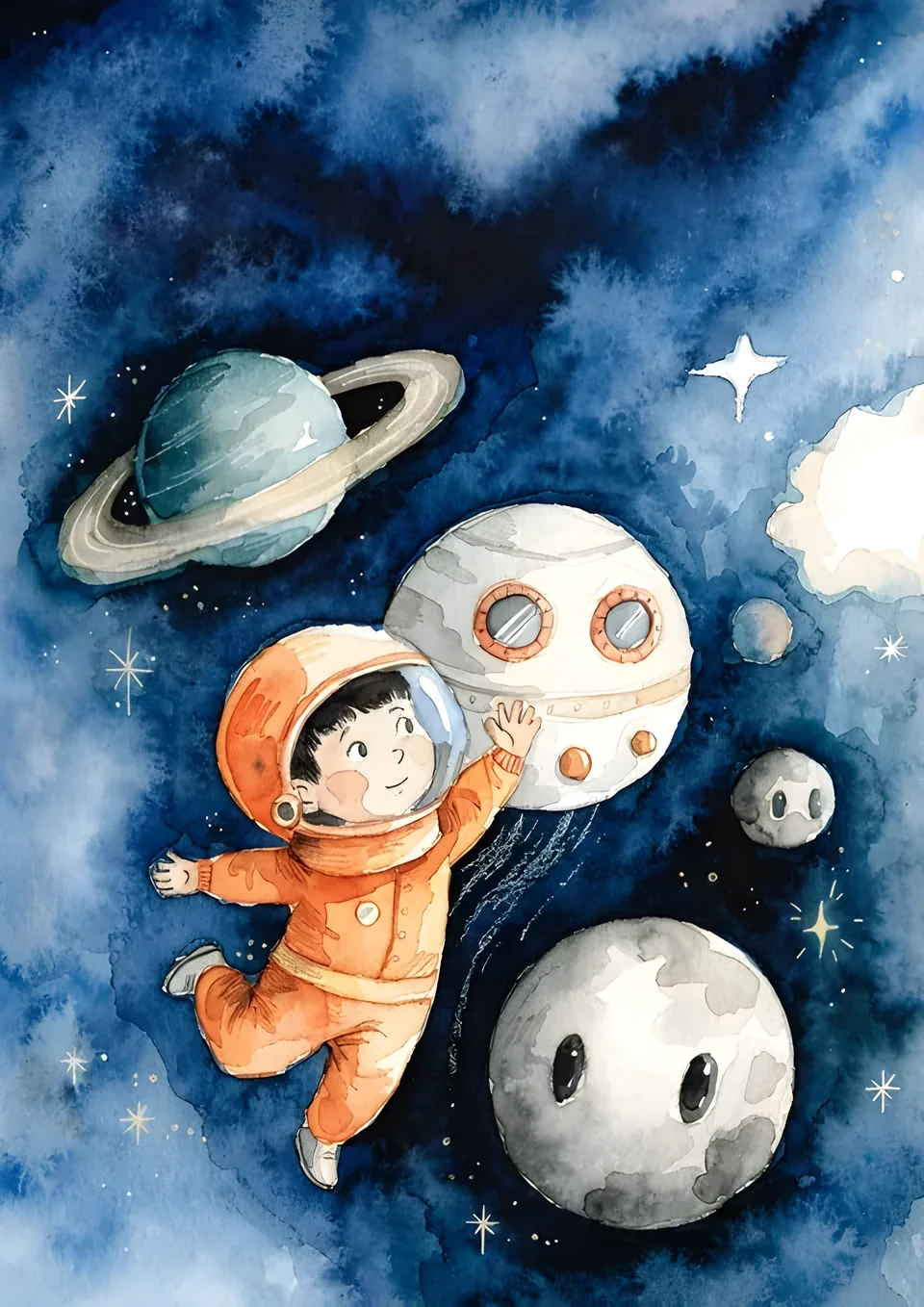
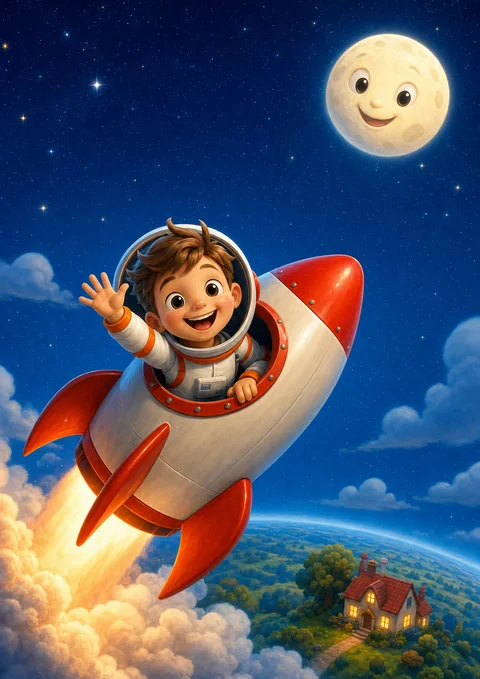
It all starts at home, where the rocket is built from things found in the shed: cardboard boxes, an old washing-up bowl and a saucepan for a helmet. After the countdown, it soars into the sky, and soon the house is just a dot below. There's no air on the moon, so the child keeps their spacesuit on all the time. And because they weigh less there, they can jump higher than ever. Their footprints stay in the dust, because there's no wind to blow them away.
Behind a crater sits a little alien, gazing longingly into space. The alien has lost its way home, and together they must read a star map to find the right planet. Perhaps they'll stop on Mars, where the ground is red. The book will reveal whether the alien gets home and what the child brings back to Earth.
Space explorers of all sizes
This idea is for children who point at the moon from their stroller, have a poster of the planets above their bed or have decided to become astronauts. It's also for anyone who has missed someone and knows what it's like to want to go home.
For a three-year-old, there's plenty to enjoy in the countdown, the high jumps and a little green friend. An eight-year-old can follow the star map, work out the alien's strange language and wonder just how far apart the planets really are.
A co-pilot and a space cat
A sibling could be the co-pilot, while a friend stays at the radio on Earth and calls out the countdown. The cat or dog could have a little space helmet of their own. Describe your garden, balcony or yard and the rocket can take off from there. Tell us about something your child likes to collect, too: it could become a present for the alien.
That evening, you could go outside and look at the moon together. It changes shape throughout the month, from a thin crescent to a round disc. Try drawing it each evening for a week, then draw the alien's home planet. Find more stories with stars and planets under Space.

 Olivia
 Muhammad
 0–1 years
 3 years
 6 years
 10 years